
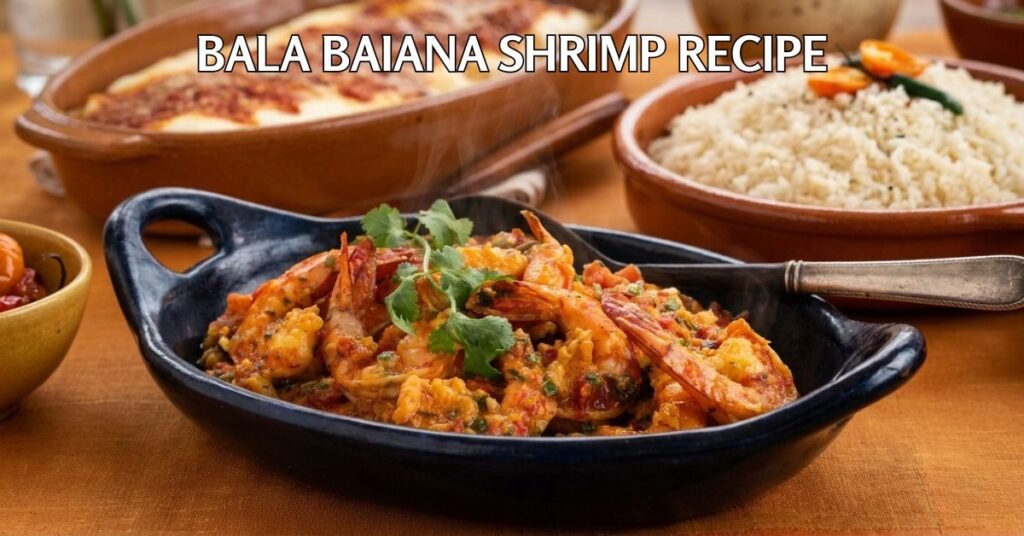
The first time I cooked Bala Baiana Recipe, I had a small bottle of dendê oil in my pantry. A friend brought it back from El Salvador. I poured a spoonful into a hot pan and added onion and garlic. The kitchen turned an orange color I had never seen from cooking before.
Dendê oil, red palm oil from northeastern Brazil, makes this dish special. Bala baiana is a shrimp stew from Bahia, made with coconut milk, tomato, cilantro, lime, and dendê oil. It tastes different from coconut curry and Mediterranean shrimp stew.
This bala baiana recipe explains how to make it from peeling the shrimp to adding the final spoonful of dendê on top. You’ll end up with a dish similar to what you would find on a beachside table in El Salvador. I have cooked this stew at least twenty-four times, and now the steps are second nature to me. The smell of dendê hitting a hot pan is my cue.
In ten seconds, the room fills with a warm, nutty, grassy aroma that reminds me of Bahia. I learned that making the base takes time and care, but cooking the shrimp is quick and easy. Get the base right, and the rest takes only twelve minutes.
Why Bala Baiana Belongs on Your Weeknight Rotation
Bala baiana is a quick and tasty seafood stew that takes about 50 minutes to make and requires little hands-on time. The main work is making a flavorful base with onion, pepper, tomato, and dendê oil, which gives the dish its special earthy taste.
Coconut milk adds richness, while lime and cilantro brighten it up. This recipe is flexible; you can swap shrimp for white fish or scallops using the same sauce. Unlike moqueca baiana, a traditional Bahian stew cooked in a clay pot, bala baiana is faster and has a thicker sauce.
Both dishes use dendê, coconut, and lime, but moqueca is slow-cooked, while bala baiana is quick to prepare in a skillet, making it perfect for weeknights.
What You Need to Know Before You Start
Dendê oil is key to this dish. Look for “azeite de dendê” in Brazilian or African markets; it should be deep red-orange. To prevent bitterness, mix 3 tablespoons of dendê oil with 1 tablespoon of neutral oil, then heat over medium.
Use full-fat coconut milk because light versions can separate. Shake the can well before opening to mix the cream and water. Prep everything before cooking the shrimp, including the rice, cilantro, and lime. Marinate the shrimp for only 10 minutes; if you marinate them longer, they will start to cook like ceviche.
I suggest using 16/20 count shrimp for tenderness. Jumbo 13/15 count shrimp will need an extra 30 seconds on each side. Smaller 31/40 count shrimp can overcook easily. Cook the shrimp in a single layer in the sauce. If needed, cook in two batches for better texture.
For tomatoes, use Roma tomatoes, as they have less water and won’t thin out the sauce. If you can’t find them, use a drained 14-ounce can of San Marzano tomatoes instead.
Common Problems and How to Fix Them
Sauce split or curdled: The heat was too high when you added the coconut milk. Lower it to a low simmer and stir constantly. If your sauce breaks, you can fix it quickly with a teaspoon of cornstarch mixed with water.
Shrimp turned rubbery: They cooked for too long. Take the pan off the heat when the shrimp turn opaque. The remaining heat will finish cooking them.
Sauce too thin: Transfer the shrimp to a plate, then cook the sauce over medium-high heat for 3–5 minutes to thicken. Add the shrimp back at the end to warm them up.
Dendê flavor too strong: Next time, use 2 tablespoons of dendê and 2 tablespoons of neutral oil. You want the dish to taste like coconut and tomato first, with dendê as a mild background flavor.
Sauce tastes flat: This usually means you need more lime juice. Add another squeeze right before serving. Check the salt too.
Shrimp curled into tight O shapes: They were overcooked. Properly cooked shrimp should form a soft C shape with the tail tucked toward the head. A tight O means they contracted too much. Next time, take them off the heat 30 seconds earlier.
Color came out muted yellow instead of deep orange: This happened because the dendê was either old, refined, or added too late. Use fresh, unrefined dendê and add it early, along with the onions, to bring out the color. A finishing drizzle helps lock in that signature shade.
Sauce broke when reheating: Coconut milk doesn’t like high heat, so it can break when reheated. Heat it in a covered skillet on low with a tablespoon of stock or water mixed in. Avoid using the microwave.
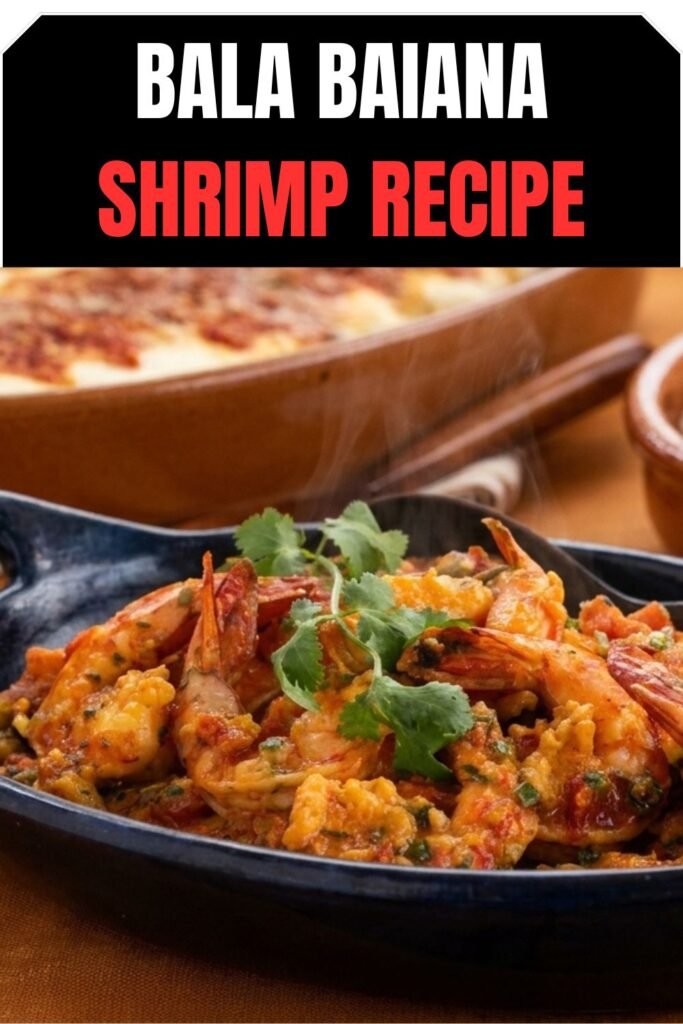
Ingredients for Bala Baiana Recipe
1.5 lb large shrimp: Use peeled and deveined shrimp, preferably 16/20 count. Keeping the tails on improves presentation, but removing them makes eating easier. Frozen shrimp are fine; thaw them in the fridge overnight.
2 tbsp lime juice: Use freshly squeezed lime juice for a better flavor. Bottled lime juice tastes bland.
1 tsp kosher salt: Sprinkle this on the shrimp during the lime marinade to help flavor penetrate before cooking.
1 tsp black pepper, freshly cracked: This enhances the spices in the stew base. Freshly cracked pepper is more flavorful than pre-ground.
3 tbsp dendê oil (red palm oil): This key ingredient is available in Brazilian markets or specialty stores. It gives the dish a deep orange color and a hint of smoky, nutty flavor.
1 tbsp neutral oil (avocado or vegetable): Use this with dendê oil to control the cooking heat. Dendê oil can burn quickly at high temperatures.
1 large yellow onion, finely diced: This forms the dish’s aromatic base. Dice it small to help it cook down into the sauce.
1 red bell pepper, diced: This adds sweetness and color. You can use yellow bell pepper too, but avoid green because it tastes too grassy.
4 cloves garlic, minced: Add this after the onion softens. Be careful not to burn the garlic, as it will ruin the sauce.
1 inch fresh ginger, grated: This adds warmth that balances the coconut milk. A microplane works best for this.
3 medium Roma tomatoes, diced: Roma tomatoes hold their shape better than vine-ripened ones. If needed, use canned diced tomatoes, making sure to drain them first.
1 tbsp tomato paste: This deepens the color and adds savory flavor. Cook it briefly before adding any liquids.
1 can (13.5 oz) full-fat coconut milk: Always use full-fat coconut milk. Light coconut milk can thin out and curdle. Shake the can well before opening.
1/2 cup seafood or fish stock: This helps achieve the right consistency for the sauce. Low-sodium chicken stock will also work, but use water only as a last resort.
1 tsp smoked paprika: This enhances the smoky flavor from the dendê oil. Sweet paprika can be used as an alternative.
1/2 tsp cayenne pepper: This adds mild background heat. Bahian cooking has warmth but is not overwhelming. Start with less and adjust as needed.
1/2 cup fresh cilantro, chopped: Add half to the sauce and reserve the other half for garnish at the end. You can also include stems since they have more flavor.
2 green onions, sliced thin: Sprinkle these on just before serving for a fresh contrast to the rich sauce.
1 lime, cut into wedges: Serve this alongside. A squeeze before the first bite brightens the flavors on the plate.
Tools I Recommend for This Recipe
- Use a large, heavy skillet or a shallow Dutch oven. A wide surface helps the sauce reduce.
- Get a sharp paring knife to peel and devein shrimp easily.
- A microplane grater is the best tool for grating fresh ginger.
- Use a wooden spoon for stirring, as it won’t scratch the pan.
- A citrus juicer helps you get every drop of lime juice.
- Have a mixing bowl ready for the shrimp lime marinade.
Step-by-Step Instructions to Make Bala Baiana Recipe
Marinate the shrimp: First, pat the shrimp dry with paper towels. Then, place them in a mixing bowl. Add lime juice, half the salt, and half the pepper. Toss gently and let them sit at room temperature for 10 minutes. Do not marinate for longer than 15 minutes, as the acid will start to cook the shrimp.
Build the aromatic base: Heat 2 tablespoons of dendê oil and some neutral oil in a large skillet over medium heat. Add the diced onion and cook for 4–5 minutes, until soft and translucent. Next, add the diced bell pepper and cook for another 3 minutes until it starts to soften.
Add garlic, ginger, and spices: Stir in the minced garlic and grated ginger. Cook for 1 minute until fragrant, but do not let the garlic brown. Add the smoked paprika and cayenne, and stir for 30 seconds to bloom the spices.
Cook the tomatoes: Add the diced Roma tomatoes and tomato paste. Stir well, then cook for 5–7 minutes until the tomatoes break down and the mixture thickens to a jam-like consistency. Press the tomatoes with the back of a spoon to help them break down faster.
Add coconut milk and stock: Pour in the full-fat coconut milk and seafood stock. Stir until combined into a smooth orange sauce. Bring it to a gentle simmer, not a boil. Cook uncovered for 8–10 minutes until the sauce thickens slightly and coats the back of a spoon.
Add the shrimp: Slide the marinated shrimp into the sauce in a single layer. Cook for 2 minutes on one side, then flip each piece and cook for another 90 seconds. The shrimp are done when they turn opaque and curl into a soft C-shape. An O-shape means they are overcooked.
Finish with cilantro and final dendê: Turn off the heat. Drizzle the remaining tablespoon of dendê oil over the top. This adds extra color and flavor. Stir in half of the chopped cilantro.
Plate and serve: Spoon the stew into shallow bowls over white rice. Top with the remaining cilantro and sliced green onions. Add a lime wedge to each bowl. Serve hot immediately while the shrimp is hot and tender.
Tips, Tricks, and Common Mistakes to Avoid
- Do not boil the coconut milk too hard: A rolling boil can break the fat, making the sauce look separated. Keep it at a low simmer.
- Add the shrimp at the end: Shrimp cook in 3 to 4 minutes. Adding them too early makes them rubbery and gray.
- Use a wide pan: A wide skillet helps the sauce reduce evenly. A narrow pan traps steam, preventing the sauce from thickening properly.
- Bloom the spices in oil: Toast the paprika and cayenne in hot oil for 30 seconds to release more aroma than if you added them at the end.
- Save some dendê oil for finishing: Drizzling it at the end helps achieve the signature deep orange color.
- Taste before adding more salt: Both the seafood stock and shrimp add saltiness. Adjust the salt at the very end.
Delicious Variations on Bala Baiana Recipe
Mixed seafood version: Add 1/2 lb of bay scallops or chunks of firm white fish along with the shrimp. Cook the fish first for 2 minutes, then add the shrimp for the final 2 minutes.
Coconut-free version: Replace the coconut milk with 1 cup of seafood stock and 1/2 cup of cashew cream. The result is lighter but still rich, with a different background note.
Spicy Bahian style: Add 1 finely diced malagueta chile (or a fresh red chile) along with the bell pepper. Double the cayenne. Serve with extra lime wedges to cool the heat.
Shrimp and okra: Add 1 cup of sliced fresh okra along with the tomatoes. Cook for an extra 4 minutes to let the okra soften and gently thicken the sauce.
What to Serve With
White rice is the best choice because it absorbs the orange sauce without overwhelming the dish. Plain short-grain or medium-grain rice works well. Coconut rice adds extra richness, which some people enjoy, while others may find it too heavy.
A fresh salad with thinly sliced red onion, cucumber, and a lime-olive oil dressing balances the meal. Fried plantains provide sweetness and texture. If you want to add more options, include farofa, a traditional side in Bahia made with toasted cassava flour, butter, and onion.
A simple side of black beans with bay leaf completes the meal without clashing with other flavors. For dessert, a small bowl of fresh mango or papaya refreshes the palate and complements the tropical theme.
Storage Tips
Refrigerator Storage: Let the stew cool to room temperature within 1 hour. Then, put it in an airtight container. You can store the shrimp and sauce together for up to 2 days. Keep in mind that the coconut milk may separate slightly as it cools, so stir it before reheating.
Freezer Storage: The sauce can be frozen for up to 2 months. However, cooked shrimp do not freeze well and will become rubbery when thawed. Freeze the sauce alone, and then add fresh shrimp when you reheat it.
Reheating Instructions: To reheat, gently warm the dish in a covered skillet over low heat for 5–7 minutes, stirring occasionally. If the sauce is too thick, add a splash of stock or water. Avoid using the microwave, as it can overcook the shrimp quickly.
Where to Source Real Dendê Oil and Why It Matters
Dendê oil, or azeite de dendê, is a bright red-orange oil from the African oil palm. It has been widely used in Bahian cooking since colonial times. This oil adds a unique flavor, similar to roasted nuts and sweet potato, to Bahian stews.
To find authentic dendê oil in North America, visit Brazilian grocery stores in cities like Miami, Boston, and Houston. You can also check African markets for similar oils, such as “zomi” or “Nigerian red palm oil.” Look for bright red-orange oil that is made from 100% palm fruit oil. Avoid refined oils, as they lose color and flavor. Brands like Yoki and Concha are available online.
For the best quality, choose unrefined, sustainably sourced oil that smells nutty and slightly sweet. If the oil smells bad, throw it away. If you can’t find dendê oil, you can mix 2 tablespoons of neutral oil with 1 teaspoon of paprika and a pinch of annatto powder as a substitute. However, this mix won’t taste exactly like traditional Bahian dishes.
Bala Baiana Shrimp Recipe
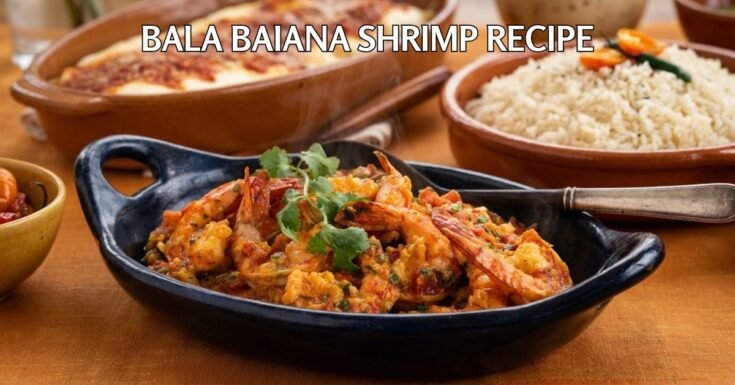
This bala baiana recipe walks through the classic Bahian shrimp stew with coconut milk, dendê oil, tomato, cilantro, and lime. Bright, rich, and ready in under an hour.
Ingredients
- 1.5 lb large shrimp, peeled and deveined
- 2 tbsp lime juice, freshly squeezed
- 1 tsp kosher salt
- 1 tsp black pepper
- 3 tbsp dendê oil (red palm oil)
- 1 tbsp neutral oil
- 1 large yellow onion, finely diced
- 1 red bell pepper, diced
- 4 cloves garlic, minced
- 1 inch fresh ginger, grated
- 3 medium Roma tomatoes, diced
- 1 tbsp tomato paste
- 1 can (13.5 oz) full-fat coconut milk
- 1/2 cup seafood or fish stock
- 1 tsp smoked paprika
- 1/2 tsp cayenne pepper
- 1/2 cup fresh cilantro, chopped
- 2 green onions, sliced thin
- 1 lime, cut into wedges
Instructions
- First, pat the shrimp dry with paper towels. Then, place them in a mixing bowl. Add lime juice, half the salt, and half the pepper. Toss gently and let them sit at room temperature for 10 minutes. Do not marinate for longer than 15 minutes, as the acid will start to cook the shrimp.
- Heat 2 tablespoons of dendê oil and some neutral oil in a large skillet over medium heat. Add the diced onion and cook for 4–5 minutes, until soft and translucent. Next, add the diced bell pepper and cook for another 3 minutes until it starts to soften.
- Stir in the minced garlic and grated ginger. Cook for 1 minute until fragrant, but do not let the garlic brown. Add the smoked paprika and cayenne, and stir for 30 seconds to bloom the spices.
- Add the diced Roma tomatoes and tomato paste. Stir well, then cook for 5–7 minutes until the tomatoes break down and the mixture thickens to a jam-like consistency. Press the tomatoes with the back of a spoon to help them break down faster.
- Pour in the full-fat coconut milk and seafood stock. Stir until combined into a smooth orange sauce. Bring it to a gentle simmer, not a boil. Cook uncovered for 8–10 minutes until the sauce thickens slightly and coats the back of a spoon.
- Slide the marinated shrimp into the sauce in a single layer. Cook for 2 minutes on one side, then flip each piece and cook for another 90 seconds. The shrimp are done when they turn opaque and curl into a soft C-shape. An O-shape means they are overcooked.
- Turn off the heat. Drizzle the remaining tablespoon of dendê oil over the top. This adds extra color and flavor. Stir in half of the chopped cilantro.
- Spoon the stew into shallow bowls over white rice. Top with the remaining cilantro and sliced green onions. Add a lime wedge to each bowl. Serve hot immediately while the shrimp is hot and tender.
Nutrition Information:
Yield:
4Serving Size:
1Amount Per Serving: Calories: 410
This Bala Baiana Recipe is an easy way to make a popular Brazilian seafood dish. Start by preparing the sauce with dendê oil, coconut milk, and ripe tomato. Add the shrimp towards the end, and finish with lime and cilantro. The result is a bowl that captures the flavors of Bahia, rich, bright, and aromatic.