
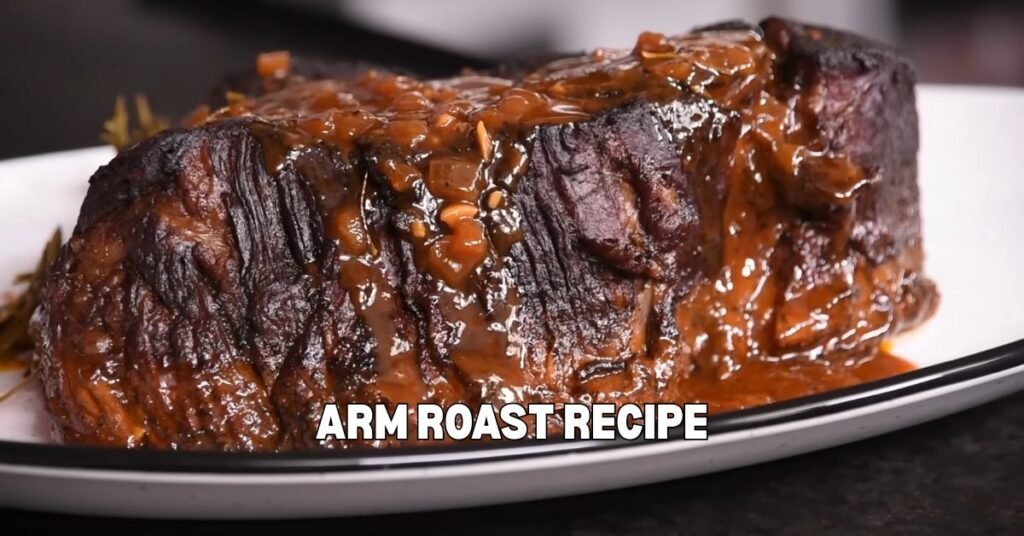
I bought a bone-in arm roast from the butcher because it was inexpensive and thick, even though I had no plan for it. Three hours later, my apartment smelled wonderful, like something a grandmother had been cooking all day. The beef turned a deep brown, the vegetables softened, and the cooking liquid became something so tasty I wanted to pour it over everything.
This Arm Roast Recipe became a favorite for cold weather. Arm roast, also known as arm chuck roast or beef shoulder roast, is a cut that most people overlook in the grocery store. It looks plain and isn’t fancy. But cooking it slowly at low heat makes it very tender, so tender that it falls apart with a fork.
This cut costs about three to four dollars per pound at most butcher shops, making a meal for six people cost less than twenty dollars before adding vegetables. The bone in the roast adds great flavor during cooking.
It releases marrow and collagen into the cooking liquid, which enhances the flavor in a way boneless cuts can’t match. Once you try it, you won’t want to go back. The kitchen smells amazing after the first hour, with a rich roasted meat aroma that draws people in.
Why This Arm Roast Recipe Is Worth Your Sunday
Many pot roast recipes suggest simply adding everything to a pot, but this one is different. First, sear the meat to create a tasty crust. Use beef stock and seasonings instead of cream of mushroom soup for the cooking liquid.
After cooking, shred the roast and let the pieces soak in the reduced sauce for ten minutes to make each bite flavorful. The arm roast comes from the shoulder area of the chuck and usually has a round bone that adds collagen for a rich, thick gravy.
You can use either a Dutch oven or a slow cooker, as both work well. Keep in mind that arm roast may also be called “chuck arm roast,” “beef shoulder roast,” or “arm pot roast,” and that boneless versions are available.
It typically costs less than a center-cut chuck roast but can provide a similar flavor when cooked properly. This budget-friendly arm roast recipe is definitely worth trying for an impressive final dish.
What You Need to Know Before You Start
Cooking an arm roast takes time. It usually needs 3 to 4 hours in the oven at 300°F or 8 to 10 hours on low in a slow cooker. For tenderness, aim for an internal temperature of at least 195°F.
Start by drying the beef with paper towels. This helps prevent steaming and produces a good sear. Use a heavy pan, like cast iron, and heat it well before adding the beef. Don’t move the meat for the first 3 minutes so it can release properly.
Generously season the roast with kosher salt, pressing it into the meat. Let it sit at room temperature for 30 minutes. Make sure the braising liquid comes about halfway up the roast without covering it. Check this with a wooden spoon. If needed, adjust the liquid level by ladling some out or adding hot stock.
Keep the pot at a gentle simmer, not boiling, while cooking. Check the roast after 90 minutes and again at three hours. Avoid lifting the lid too often.
Common Problems and How to Fix Them
- Tough Roast: Cook longer (195–205°F). Put it back in the oven for 45–60 mins with water or stock, and cover it tightly.
- Dried Out Roast: This usually happens because of a loose lid or high temperature. Add a cup of warm beef stock and lower the oven temperature by 25°F.
- No Crust from Searing: The pan wasn’t hot enough, or the beef was too wet. Preheat the pan for 3 minutes before adding oil.
- Thin Braising Liquid: Take out the roast and reduce the liquid on the stovetop over medium-high heat for 10–15 mins to make it thicker.
- Mushy Vegetables: They were added too early. For a Dutch oven, add root vegetables in the last 90 minutes.
- Under-Seasoned Roast: If you add salt too late, it only flavors the surface. Use kosher salt pressed in 30 minutes before searing.
- Burned Fond: The pan was too hot. Use medium-high heat and deglaze the pan immediately if it looks black.
- Tender but Falling Apart: This is normal for arm roast. For neat slices, take it out at 185°F and let it rest for 30 minutes.
- Key Takeaway: Most problems come from not having enough time or temperature. Manage these, and the recipe will work.

Ingredients for Arm Roast Recipe
- 3–4 lb bone-in arm roast (beef shoulder): Use bone-in for a richer braising liquid because the bone adds collagen. Boneless is easier to slice. Both cuts are fine. Ask your butcher for arm chuck roast or beef shoulder roast; they are the same.
- 2 tbsp neutral oil (avocado or vegetable): Choose a high smoke-point oil for searing. Olive oil can burn at high temperatures.
- 1 tbsp kosher salt: Don’t use table salt without cutting the amount in half. Season the meat at least 30 minutes before cooking to let the salt soak in.
- 1 tsp black pepper, freshly cracked: You can use pre-ground pepper, but freshly cracked pepper has a stronger aroma.
- 1 tsp garlic powder: Add this to the dry rub with salt and pepper for a roasted savory flavor.
- 1 tsp smoked paprika: This adds color and a slight smokiness. You can also use sweet paprika.
- 1 large yellow onion, roughly chopped: Avoid dicing it finely. It will dissolve in the braising liquid, adding body to the sauce.
- 4 cloves garlic, smashed: Smash instead of mince for a gentler, sweeter garlic flavor during cooking.
- 2 stalks celery, cut into 2-inch pieces: This adds a subtle herbal flavor. You can skip it if you don’t have any.
- 2 tbsp tomato paste: Cook this in the pot before adding liquid to add depth and color to the sauce.
- 2 cups low-sodium beef stock: This is the main braising liquid. Low-sodium stock helps control the saltiness.
- 2 sprigs fresh thyme (or ½ tsp dried): Thyme pairs well with braised beef. The leaves will fall off and flavor the sauce.
- 1 sprig fresh rosemary: This adds a piney flavor. Remove it before serving.
- 2 bay leaves: These add a subtle flavor to the braising liquid. Always remove them before serving.
- 3 medium Yukon Gold potatoes, quartered: Add these in the last 90 minutes so they stay intact. Yukon Golds hold their shape better than russets.
- 2 large carrots, cut into 1.5-inch pieces: These are the serving carrots, added later while other chopped vegetables dissolve into the sauce earlier.
Tools I Recommend for This Recipe
- 5–7 quart enameled Dutch oven: This is the most important cooking pot you’ll need.
- Instant-read thermometer: Use this to check if your food is cooked properly.
- Heavy-duty tongs: These help you flip the roast without losing any juices.
- Wooden spoon: Use this to scrape the tasty bits off the bottom when deglazing.
- Splatter screen: This is optional, but it keeps your stovetop clean while searing.
- Fine-mesh strainer: Use this to strain the cooking liquid into a clean pan for gravy.
Step-by-Step Instructions to Make Arm Roast Recipe
Prep the Beef (30 minutes ahead): Remove the roast from the refrigerator 30 to 45 minutes before cooking. Cold beef cooks unevenly. Use paper towels to dry it completely. Mix salt, pepper, garlic powder, and smoked paprika together, then rub the seasoning firmly on all sides of the meat.
Preheat the Oven: Set the oven to 300°F (148°C). Cooking slowly at a low temperature is best. Higher temperatures can cook the outside too quickly, tightening the meat before it gets tender.
Sear the Roast: Heat a Dutch oven on medium-high for 2–3 minutes. Add oil. When the oil shimmers and you see some smoke, place the roast, fat side down. Don’t touch it. Let it sear for 3–4 minutes until a dark brown crust forms. Flip it and repeat on all four sides, taking about 12–15 minutes total. Move the roast to a plate.
Build the Aromatic Base: Lower the heat to medium. Add onion, garlic, and celery to the same pot, along with the brown bits on the bottom. Cook for 5 minutes, stirring occasionally, until the onion softens. Add tomato paste and stir for 1 minute until it darkens a bit.
Deglaze the Pan: Pour in additional beef stock, then use a wooden spoon to scrape the bottom of the pot. This mixes in the brown bits for added flavor. Let it reduce by half, which will take about 3 minutes.
Add Liquid and Braise: Pour in beef stock. Add thyme, rosemary, and bay leaves. Place the seared roast back into the pot the liquid should reach halfway up the sides of the meat. Bring it to a simmer, cover, and transfer to the oven. Cook undisturbed for 1.5 hours.
Add Vegetables: After 1.5 hours, open the oven and add potatoes and carrots around the roast. Spoon some of the cooking liquid over them. Cover and return to the oven for another 1.5–2 hours.
Check for Doneness: The roast is ready when an instant-read thermometer shows 195–205°F, and the meat pulls apart easily with two forks. Total cooking time is usually 3–4 hours, but every roast varies. Check at the 3-hour mark. If it feels tough, let it cook longer.
Rest and Pull: Move the roast to a cutting board and let it rest for 15 minutes. Use two forks to shred it into large chunks. Throw away the herb sprigs and bay leaves. Return the shredded beef to the pot, stir it into the cooking liquid, and serve from the pot.
Tips, Tricks, and Common Mistakes to Avoid
Do not skip the sear: It’s easy to skip this step in a slow cooker, but taking 15 minutes to sear adds flavor that seasoning alone cannot match.
Use a thermometer instead of a timer: a 3-pound roast may take about 2.5 hours, while a 4.5-pound roast might need about 4.5 hours. The thermometer gives you the accurate cooking time.
Keep the liquid level consistent: Check the pot every 90 minutes. The liquid should always be about halfway up the meat. If it drops below that, add hot water or stock.
Avoid opening the oven frequently: Each time you lift the lid, you lower the temperature by 25–50°F, slowing the cooking process. Check once when you add vegetables, then leave it closed.
Salt the meat in advance: Salting 30 minutes before cooking helps draw out moisture, and the meat then absorbs the salt. This method, called dry-brining, really improves the flavor.
Make it a day ahead: The flavors will be better on the second day, and you can easily remove the cold fat before reheating.
Delicious Variations on Arm Roast Recipe
Italian-style with tomatoes and olives: Use a can of crushed San Marzano tomatoes. Add a handful of Kalamata olives and a pinch of red pepper flakes. Skip the potatoes and serve the dish over polenta or egg noodles.
Tex-Mex shredded beef: Season the beef with cumin, chili powder, and chipotle in adobo. Use beef stock and orange juice for braising. Shred the beef finely and serve in tacos with pickled onions and cotija cheese.
Asian-inspired soy braise: Mix tomato paste with soy sauce and a tablespoon of brown sugar. Add a 2-inch piece of fresh ginger and 2 star anise pods. Serve over jasmine rice.
Slow cooker version: Sear the roast on the stovetop, then move everything to the slow cooker. Cook on LOW for 8–10 hours or HIGH for 5–6 hours. Add vegetables in the last 2 hours if cooking on LOW.
What to Serve With
The cooking liquid does a lot of the work, so choose side dishes that soak it up well. Creamy mashed Yukon Gold potatoes absorb the sauce nicely. Wide egg noodles mixed with butter catch every drop. A thick slice of sourdough bread is great for dipping.
Roasted root vegetables like parsnips and turnips, cooked on their own, add color and texture. A simple arugula salad with lemon dressing balances the richness and refreshes your palate between bites. Creamy polenta goes well with the Italian version of the dish.
For a Sunday dinner, serve buttered green beans with garlic and a basket of warm dinner rolls. A dollop of horseradish cream on the side gives a sharp contrast that enhances every bite.
For leftovers, top toasted ciabatta with shredded beef, spoon warm cooking liquid over it, and add sharp cheddar and pickled red onions for a delicious sandwich.
Storage Tips
Fridge: Let the roast cool to room temperature for no more than 2 hours. Then put it in an airtight container with the braising liquid. You can store it in the refrigerator for up to 4 days. The fat will harden on top overnight; you can either skim it off before reheating or stir it back in for extra flavor.
Freezer: Arm roast freezes well. Put the shredded beef and braising liquid into freezer-safe bags or containers. You can freeze it for up to 3 months. Thaw it overnight in the refrigerator before reheating.
Reheating: The best way to reheat is low and slow on the stovetop. Add the beef and liquid to a saucepan over medium-low heat, cover, and cook for 15–20 minutes, stirring occasionally. You can also use the microwave; set it to 50% power to prevent the beef from drying out. If the liquid looks thick, add a splash of beef stock.
How to Make Pan Gravy from the Drippings
At the end of cooking, the liquid turns into a sauce. You can make it smooth in about 10 minutes. First, take out the beef and vegetables. Strain the liquid into a saucepan, pressing the solids to get all the juices. Bring it to a boil, then let it simmer, uncovered, for 10–15 minutes, until it reduces by one-third and thickens enough to coat the back of a spoon. Taste it and add salt if needed.
If you want a thicker gravy, mix 1 tablespoon of softened butter with 1 tablespoon of flour to make a paste. Add this paste to the simmering liquid and whisk until smooth. Let it simmer for another 2 minutes until it looks glossy. You can add a teaspoon of red wine vinegar, a bit of cold butter for a silky finish, and a grind of black pepper before serving.
Taste the gravy at three stages: when you first make it (it will be too thin), halfway through (as the flavor builds), and at the end (for final seasoning). An average arm roast will give you about two cups of gravy. You can refrigerate it for four days or freeze it in quarter-cup portions for up to two months.
Arm Roast Recipe
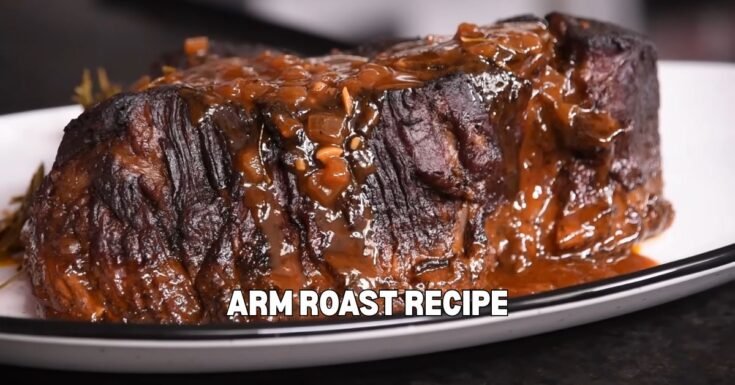
This arm roast recipe turns a cheap beef shoulder cut into fork-tender pot roast with a rich, glossy braising sauce. Step-by-step Dutch oven method inside.
Ingredients
- 3–4 lb bone-in arm roast (beef shoulder)
- 2 tbsp neutral oil
- 1 tbsp kosher salt
- 1 tsp black pepper, freshly cracked
- 1 tsp garlic powder
- 1 tsp smoked paprika
- 1 large yellow onion, roughly chopped
- 4 cloves garlic, smashed
- 2 stalks celery, cut into 2-inch pieces
- 2 tbsp tomato paste
- 2 cups low-sodium beef stock
- 2 sprigs fresh thyme
- 1 sprig fresh rosemary
- 2 bay leaves
- 3 medium Yukon Gold potatoes, quartered
- 2 large carrots, cut into 1.5-inch pieces
Instructions
- Remove the roast from the refrigerator 30 to 45 minutes before cooking. Cold beef cooks unevenly. Use paper towels to dry it completely. Mix salt, pepper, garlic powder, and smoked paprika together, then rub the seasoning firmly on all sides of the meat.
- Set the oven to 300°F (148°C). Cooking slowly at a low temperature is best. Higher temperatures can cook the outside too quickly, tightening the meat before it gets tender.
- Heat a Dutch oven on medium-high for 2–3 minutes. Add oil. When the oil shimmers and you see some smoke, place the roast, fat side down. Don’t touch it. Let it sear for 3–4 minutes until a dark brown crust forms. Flip it and repeat on all four sides, taking about 12–15 minutes total. Move the roast to a plate.
- Lower the heat to medium. Add onion, garlic, and celery to the same pot, along with the brown bits on the bottom. Cook for 5 minutes, stirring occasionally, until the onion softens. Add tomato paste and stir for 1 minute until it darkens a bit.
- Pour in additional beef stock, then use a wooden spoon to scrape the bottom of the pot. This mixes in the brown bits for added flavor. Let it reduce by half, which will take about 3 minutes.
- Pour in beef stock. Add thyme, rosemary, and bay leaves. Place the seared roast back into the pot the liquid should reach halfway up the sides of the meat. Bring it to a simmer, cover, and transfer to the oven. Cook undisturbed for 1.5 hours.
- After 1.5 hours, open the oven and add potatoes and carrots around the roast. Spoon some of the cooking liquid over them. Cover and return to the oven for another 1.5–2 hours.
- The roast is ready when an instant-read thermometer shows 195–205°F, and the meat pulls apart easily with two forks. Total cooking time is usually 3–4 hours, but every roast varies. Check at the 3-hour mark. If it feels tough, let it cook longer.
- Move the roast to a cutting board and let it rest for 15 minutes. Use two forks to shred it into large chunks. Throw away the herb sprigs and bay leaves. Return the shredded beef to the pot, stir it into the cooking liquid, and serve from the pot.
Nutrition Information:
Yield:
6Serving Size:
1Amount Per Serving: Calories: 490
An arm roast recipe is simple but requires time and patience. First, dry the beef and sear it well. Then, make a good braising liquid and let the oven do the rest. The connective tissue in beef will break down, making it tender. You’ll end up with beef that pulls apart easily and a delicious sauce.
Plan your cooking time, set a timer, and trust the process. Once you cover the pot, the arm roast will cook on its own, and the result will be one of the most satisfying meals you can make at home.