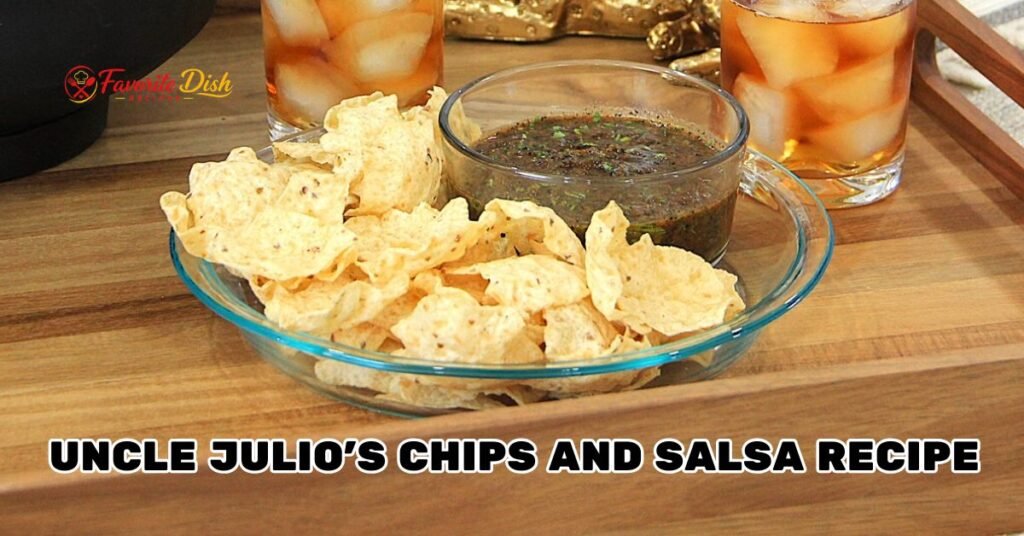
I started testing Uncle Julio’s Chips and Salsa Recipe on a Tuesday night in my apartment kitchen, three weeks after my sister’s baby shower. At that shower, a catering company set up a chip bar in the corner. I spent almost forty-five minutes on it instead of talking to anyone.
My mom pulled me away and asked why I was so focused on a bowl of salsa. I didn’t have a good answer then, but I kept thinking about it for days.
A coworker used to bring takeout from a restaurant near her old apartment in Dallas every Friday. She shared it with the office. After she moved to Denver, we stopped getting the Friday deliveries. I decided I would rather learn to make the dish myself than keep missing out.
This post shares the results from a dozen test batches I cooked on my back porch using a cast iron pan my grandmother left me.
What Makes This Homemade Chips and Salsa Taste So Good?
Uncle Julio’s salsa stands out because it has a rich, smoky flavor with a touch of sweetness. Roasting tomatoes and onions at 400°F makes them soft without burning the skin. This process gives the salsa its unique color and smell.
The sweetness is subtle and balances the sharpness of lime juice and the smoky taste from the chipotles. Without chipotles, the salsa is more like regular pico de gallo and loses its deep color and memorable flavor.
The chips served with the salsa are also important. Restaurant chips are lighter and crispier than store-bought ones because they are fried fresh. They are quickly drained and salted while hot, which enhances their taste.
Ingredients for Uncle Julio’s Chips and Salsa Recipe
6 Roma tomatoes: These are the main ingredients for the salsa. They develop a char that adds color and a smoky flavor. I buy mine from the regular produce section at Kroger instead of specialty stores, as firm Romas work just as well.
Choose tomatoes that give slightly when pressed with your thumb rather than hard ones, as unripe tomatoes char unevenly.
½ white onion, peeled and halved: White onion chars nicely and blends smoothly without becoming bitter like red onion. I select a regular yellow-net bag from the produce section instead of pre-cut onions.
Keep the unused half wrapped tightly in the fridge since cut onions absorb odors quickly.
3 cloves garlic, unpeeled: Roasting the garlic in their skins protects the flesh from burning and makes it soft and sweet instead of sharp. I buy garlic heads in a mesh bag rather than pre-peeled options, which can dry out quickly.
Remember that garlic cooks faster than the tomatoes.
2 chipotle peppers in adobo sauce, plus 1 tbsp adobo: These provide the smoky flavor for the dip. I keep a can of La Costeña in the pantry as it is the brand my local store usually carries.
You can add a third pepper for more heat, but taste it as you go because the spiciness builds quickly.
1 jalapeño, stem removed: This adds fresh heat that balances the smoky flavor. Keep the seeds for more spice, or remove them for a milder taste. A serrano pepper can be used instead for more heat without adding another chipotle.
½ cup fresh cilantro, leaves and tender stems: The stems are flavorful, so you don’t need to remove them before measuring. I like to get a bunch from the farmers market on Saturdays, as it lasts longer than plastic-wrapped grocery options.
If cilantro tastes like soap to you, you can skip it, and the salsa will still be good.
2 tbsp fresh lime juice (about 1 lime): The acidity helps balance the richness of the charred vegetables and enhances all the flavors. Fresh lime juice is much better than bottled juice. Roll the lime under your palm on the counter for more juice.
1 tsp ground cumin: This adds warmth and earthiness, leaning the flavor towards Tex-Mex. I keep a small McCormick container, as it is easy to find and stays fresh for a long time.
Toast it in a dry pan for half a minute before blending, since raw cumin can taste dusty compared to the charred vegetables.
1 ½ tsp kosher salt: Salt combines the sweetness, acidity, and smokiness into a balanced flavor. I use Diamond Crystal at home, which measures lighter than Morton, so I reduce the amount slightly with denser brands. Add salt gradually and taste between each addition instead of putting it all in at once.
1 tsp sugar: No one guesses this is in the salsa, but it helps soften the acidity from the lime without adding noticeable sweetness. Any plain granulated sugar works; there’s no need for a special brand. Use it sparingly since too much can make the salsa taste fruity instead of savory.
12 corn tortillas (for chips): Once cut and fried, these become the chips. Slightly stale tortillas fry better than fresh ones. I purchase Mission brand yellow corn tortillas since their color makes for a nice-looking chip. Let a fresh package sit out overnight uncovered before frying to mimic staleness.
4 cups neutral oil for frying: Use any oil with a high smoke point, like vegetable, canola, or peanut oil. I keep a large jug of Wesson vegetable oil specifically for frying. After frying, strain the used oil through a fine sieve to use it again for another round before it starts to taste off.
Essential Equipment for Charring and Frying
- Cast iron skillet or comal: for charring the tomatoes and onion directly.
- Heavy-bottomed pot or Dutch oven: keeps oil temperature steady while frying.
- Digital probe thermometer: tracks oil heat without guessing.
- Slotted spoon or spider strainer: lifts chips clear of the oil.
- Blender or food processor: gives the right chunky texture.
- Cooling rack over paper towels: drains chips on every side.
How to Make Uncle Julio’s Chips and Salsa Recipe
Char the Vegetables: Heat a dry cast iron skillet on high for three minutes. Place the tomatoes, onion halves (cut-side down), garlic (in its skin), and jalapeño in the pan.
Char everything for eight to ten minutes, turning every two minutes, until the skins blister and show black spots. Remove the garlic after four minutes, as it cooks faster than the tomatoes.
Cool and Peel: Move everything to a plate and let it cool for five minutes. Use your fingers to slip the skin off each garlic clove. Keep the tomato skins on because the char adds color and smell to the salsa. Trim the stem off the jalapeño.
Toast the Cumin: While the vegetables cool, add cumin to a dry small pan over medium heat. Swirl it for about thirty seconds, until it smells nutty. Remove it from heat immediately to avoid bitterness.
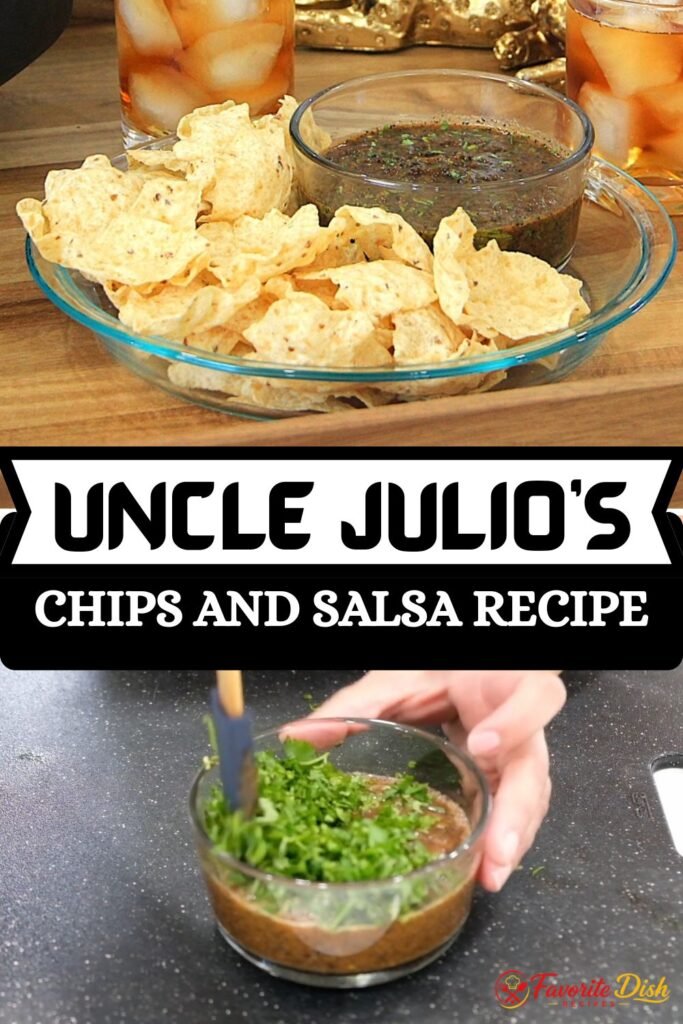
Blend the Salsa: Add the charred vegetables, chipotles with their sauce, cilantro, lime juice, toasted cumin, salt, and sugar to the blender. Pulse eight or nine times, checking the texture after each round.
Stop when you see small chunks instead of a smooth mixture. Taste and adjust the salt or lime as needed.
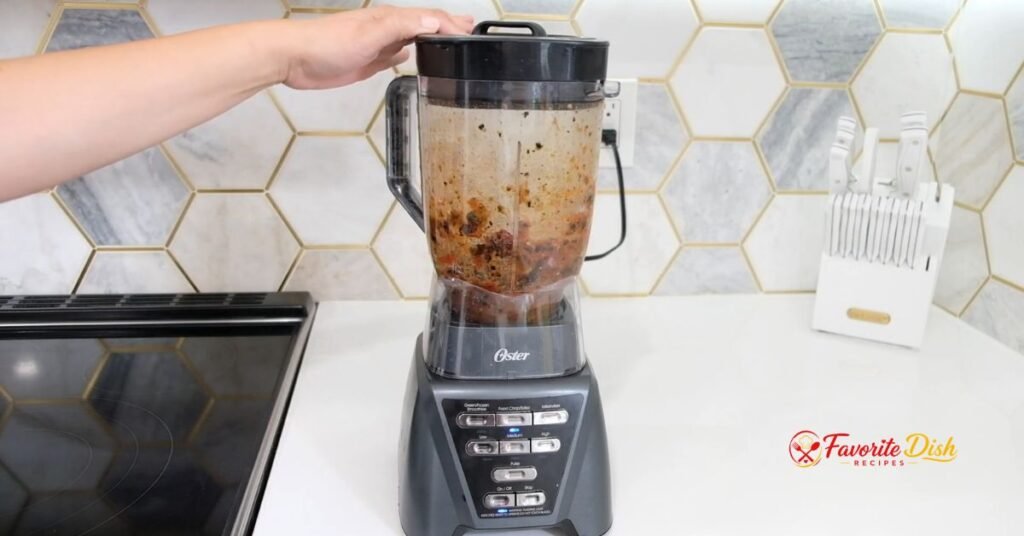
Let It Rest: Pour the finished salsa into a bowl and let it sit for at least thirty minutes before serving. This allows the chipotle heat to spread throughout the salsa. Two hours is even better, especially for gatherings later in the day.
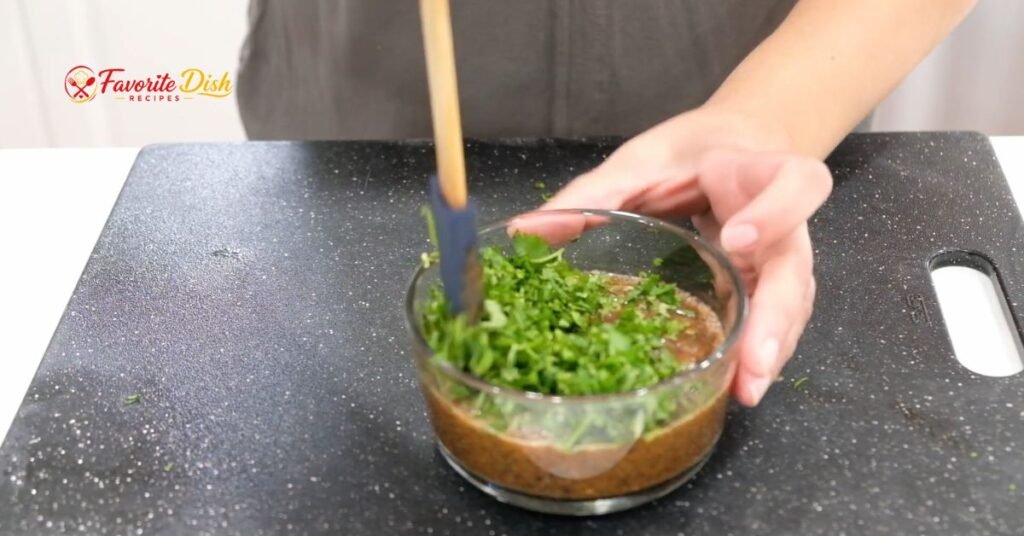
Cut the Tortillas: Stack four tortillas and cut each stack into six wedges with a sharp knife or pizza cutter. Spread the wedges on a sheet pan in a single layer and let them sit uncovered for thirty minutes. This helps them dry out slightly and crisp up.
Heat the Oil: Pour about two inches of oil into a heavy pot and heat it to 350°F over medium-high heat. Use a thermometer to check, as the oil should shimmer without smoking. If it smokes, it’s too hot for frying.
Fry in Batches: Lower a small handful of wedges into the oil at a time. Avoid crowding the pot, as this can make the chips greasy. The chips will sink and then rise and bubble within a few seconds.
Fry for ninety seconds to two minutes, stirring once, until they are golden and the bubbling slows down.
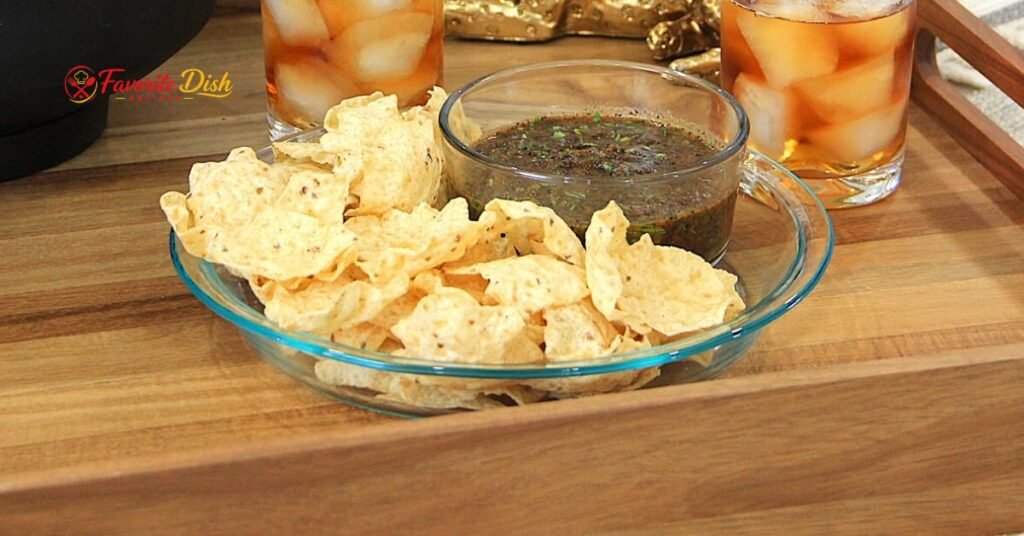
Drain and Salt: Use a slotted spoon to lift the chips out and let the excess oil drip back into the pot. Move them quickly to a paper towel-lined rack and salt them within ten seconds while they are still oily. If you wait too long, the salt won’t stick.
How to Fix Common Salsa and Chip Problems
Salsa tastes flat: the tomatoes were not charred hard enough, or the salt is low. Push the char further next time and add salt a quarter teaspoon at a time until the flavor sharpens.
Salsa turns watery: under-charred tomatoes release more liquid than charred ones. Pour the finished salsa through a fine-mesh strainer for a couple of minutes to pull off the excess.
Salsa blends too smooth: the blender ran too long. This style should show visible flecks of tomato skin and cilantro. Stick to eight or nine pulses, then stop and check the texture before going further.
Chips turn out greasy: the oil sat below 340°F. Drop one test chip in first. It should bubble hard the second it touches the oil.
Chips burn: the oil climbed too hot. Cut the heat and let the temperature settle back to 350°F before the next batch goes in.
Salt slides off the chips: they cooled before getting salted. The window is short, about ten seconds after they leave the oil, so have the salt ready before the first batch comes out.
My Best Tips for Better Salsa and Crispier Chips
Salsa separates in the bowl after resting: give it a quick stir before serving, since the tomato liquid naturally settles to the bottom during the rest period.
Chips taste stale by the second day: reheat them in a 350°F oven for three to four minutes instead of the microwave, which turns them soft and chewy.
Salsa tastes overly smoky and bitter: the char went too dark on the skins. Scrape off any fully blackened, papery patches before blending next time.
Chips break apart when scooping: the tortillas were cut too thin. Aim for six even wedges per tortilla rather than eight or ten smaller pieces.
Salsa loses its punch after a day in the fridge: a small squeeze of fresh lime right before serving brings the brightness back.
Oil smells burnt on the second frying batch: bits of tortilla debris are scorching in the pot. Skim the surface with a fine strainer between batches.
Easy Variations to Change the Flavor and Heat
Spicy Habanero Version: Swap the jalapeño for a charred habanero and bump the chipotles up to three. The heat climbs noticeably while the smoky base stays the same. Wear gloves when you handle the habanero, and serve this batch alongside a pitcher of margaritas for guests who like a challenge.
Fire-Roasted Shortcut: Skip the charring step entirely and use a 28-ounce can of fire-roasted tomatoes, drained first. The result loses a bit of smokiness but comes together in about ten minutes flat, which works well on a weeknight before a quick taco dinner.
Avocado Salsa Verde Twist: Replace the chipotles with two charred tomatillos and stir in half a ripe avocado at the blender stage. The finished salsa turns creamy and green-red instead of smoky red, and it pairs nicely with grilled fish tacos.
Black Bean and Corn Version: Stir a half cup each of black beans and charred corn kernels into the finished salsa. This turns a dip into a chunky topping, good spooned over grilled chicken instead of served with chips alone.
Extra-Smoky Batch: Add one more chipotle pepper and a full extra tablespoon of adobo sauce for anyone who wants more depth.
What Dishes to Try With This Uncle Julio’s Chips and Salsa
This salsa pairs well with many Tex-Mex dishes. You can use it on sizzling fajitas with peppers and onion, grilled carne asada tacos, or with warm flour tortillas and queso.
It is great on enchiladas instead of jarred sauce or stirred into black bean soup for added flavor. Top grilled fish with a spoonful of salsa and a squeeze of lime for extra taste.
Besides chips, this salsa goes well with guacamole, queso fundido, or a seven-layer dip at parties. For a full meal, start with this salsa and guacamole side by side. Then bring out carne asada right off the grill with warm corn tortillas for tacos.
Serve charro beans and a simple cabbage slaw with lime on the side. This creates a complete meal with little planning. A cold Sprite is a nice drink to enjoy with it.
How to Store the Salsa and Keep Chips Crisp
To keep salsa fresh, store it in an airtight glass jar in the fridge. It will stay good for up to 5 days, and the flavor will improve overnight as the chipotle mixes in. Before serving, stir the salsa since some separation is normal.
For long-term storage, you can freeze the salsa in freezer-safe containers. Leave an inch of space at the top. It will last for up to 3 months. Thaw it overnight in the fridge instead of on the counter. The texture may become a bit softer after thawing.
As for chips, it’s best to fry only what you will eat in one sitting. Day-old chips lose their crunch quickly, even if stored in a sealed bag.
If some chips do go soft, you can restore their crispness by baking them in a 350°F oven for a few minutes. Avoid using the microwave, as it makes them chewy instead of crispy.
Uncle Julio’s Chips and Salsa Recipe FAQs
1. Can I make this salsa without a blender?
Yes, you can use a food processor. It gives you more control over the texture since you can pulse it and check it often.
2. Do I need a cast iron skillet, or will any pan work?
You can use a heavy stainless steel pan, but it may stick more and needs more oil. It won’t taste as smoky as with cast iron or a comal.
3. How spicy does this salsa turn out?
With two chipotles and one jalapeño, it’s medium spicy, noticeable but not too much. Use one chipotle for a milder salsa, or remove the seeds from the jalapeño.
4. Can I use canned tomatoes instead of charring fresh ones?
Yes, but it won’t have the same smoky flavor. Fire-roasted canned tomatoes are the best option.
5. Why did my chips turn out chewy instead of crisp?
The oil may have been too cool, causing the chips to absorb oil instead of frying quickly. Use a thermometer to keep the oil at 350°F while frying.
6. Is there a way to make this without frying the chips?
You can bake tortilla wedges brushed with oil at 375°F for about ten minutes. They won’t be as crisp as fried chips.
7. Can I skip the sugar entirely?
Yes, but the salsa will taste sharper. Using half the amount listed is a good compromise if you want to reduce it.
8. What size batch does this recipe make?
This recipe fills a medium serving bowl, enough for four to six people as an appetizer with chips.
Uncle Julio’s Chips and Salsa Recipe
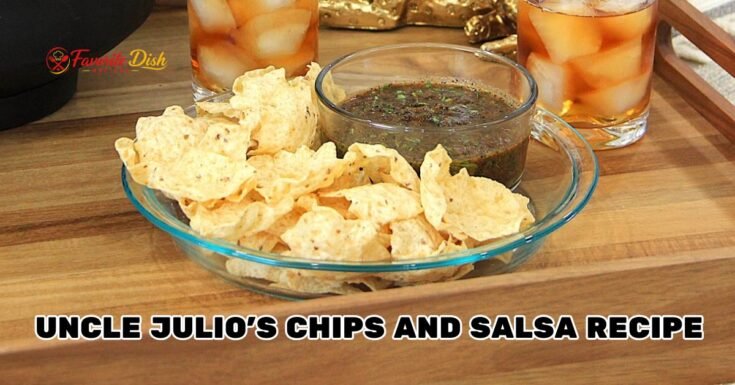
Make this Uncle Julio's Chips and Salsa Recipe with smoky charred tomatoes, chipotle peppers, fresh lime, and crispy homemade corn chips.
Ingredients
- 6 Roma tomatoes
- ½ white onion, peeled and halved
- 3 cloves garlic, unpeeled
- 2 chipotle peppers in adobo sauce, plus 1 tablespoon adobo sauce
- 1 jalapeño, stem removed
- ½ cup fresh cilantro, leaves and tender stems
- 2 tablespoons fresh lime juice
- 1 teaspoon ground cumin
- 1 ½ teaspoons kosher salt
- 1 teaspoon granulated sugar
- 12 corn tortillas
- 4 cups neutral oil, for frying
Instructions
- Heat a dry cast iron skillet on high for three minutes. Place the tomatoes, onion halves (cut-side down), garlic (in its skin), and jalapeño in the pan.
- Char everything for eight to ten minutes, turning every two minutes, until the skins blister and show black spots. Remove the garlic after four minutes, as it cooks faster than the tomatoes.
- Move everything to a plate and let it cool for five minutes. Use your fingers to slip the skin off each garlic clove. Keep the tomato skins on because the char adds color and smell to the salsa. Trim the stem off the jalapeño.
- While the vegetables cool, add cumin to a dry small pan over medium heat. Swirl it for about thirty seconds, until it smells nutty. Remove it from heat immediately to avoid bitterness.
- Add the charred vegetables, chipotles with their sauce, cilantro, lime juice, toasted cumin, salt, and sugar to the blender. Pulse eight or nine times, checking the texture after each round.
- Stop when you see small chunks instead of a smooth mixture. Taste and adjust the salt or lime as needed.
- Pour the finished salsa into a bowl and let it sit for at least thirty minutes before serving. This allows the chipotle heat to spread throughout the salsa. Two hours is even better, especially for gatherings later in the day.
- Stack four tortillas and cut each stack into six wedges with a sharp knife or pizza cutter. Spread the wedges on a sheet pan in a single layer and let them sit uncovered for thirty minutes. This helps them dry out slightly and crisp up.
- Pour about two inches of oil into a heavy pot and heat it to 350°F over medium-high heat. Use a thermometer to check, as the oil should shimmer without smoking. If it smokes, it’s too hot for frying.
- Lower a small handful of wedges into the oil at a time. Avoid crowding the pot, as this can make the chips greasy. The chips will sink and then rise and bubble within a few seconds.
- Fry for ninety seconds to two minutes, stirring once, until they are golden and the bubbling slows down.
- Use a slotted spoon to lift the chips out and let the excess oil drip back into the pot. Move them quickly to a paper towel-lined rack and salt them within ten seconds while they are still oily. If you wait too long, the salt won’t stick.
Nutrition Information:
Yield:
6Serving Size:
1Amount Per Serving: Calories: 360
Two key details make this Uncle Julio’s Chips and Salsa Recipe stand out from regular pico de gallo: charring the tomatoes well and keeping the oil at 350°F for frying the chips. If you skip either step, the result will be thin and pale instead of smoky.