
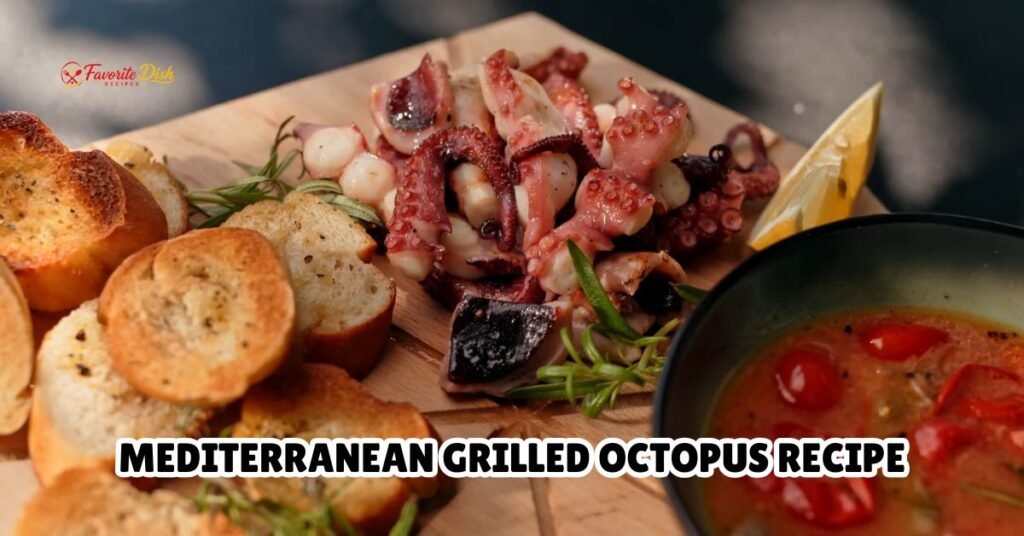
Mediterranean Grilled Octopus got my father-in-law to put down his fork mid-bite. He grills steak every weekend and rarely touches seafood. That night, he cleared his plate before anyone else at the table.
Most homemade versions of grilled octopus come out rubbery instead of tender. People rush the boiling step, or skip it and go straight to the grill. The result is meat that fights back instead of pulling apart easily.
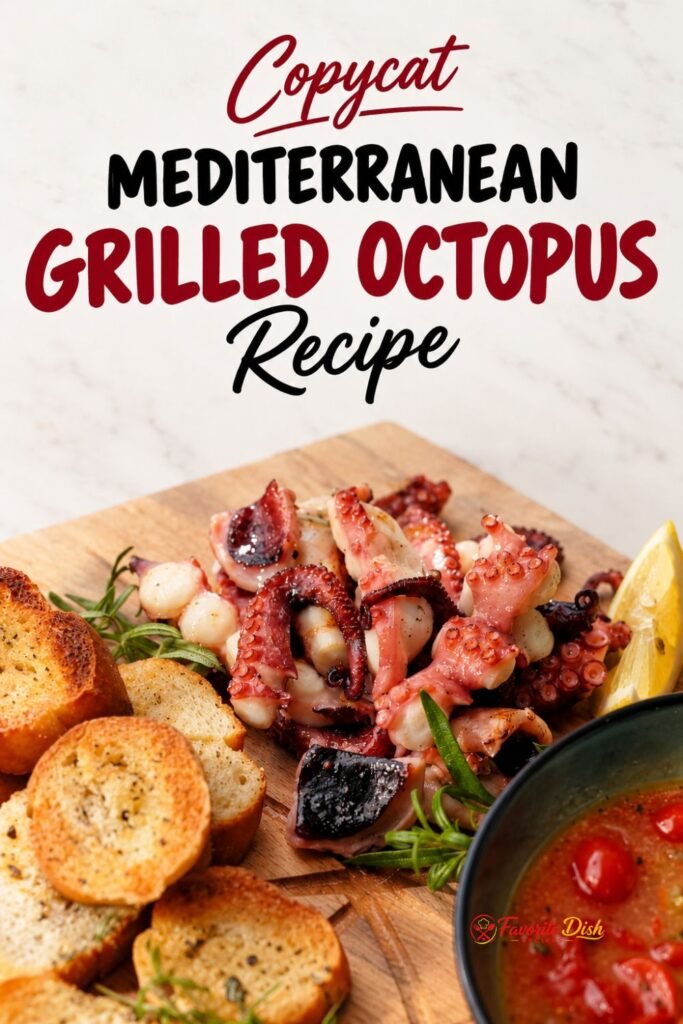
This recipe copies the octopus served at Estiatorio Milos. It’s a Greek seafood chain known for grilling whole fish and octopus over open charcoal. Their tentacles come out blistered at the tips with a soft, custardy center.
My Mediterranean Grilled Octopus Recipe is my homemade version of that Milos-style plate. It uses the same two-part method: a long, slow simmer, then a short, hot finish on the grill.
Is Octopus Hard to Cook at Home?
People ask me this more than any other question. The truthful answer is no, not really. Octopus just needs patience during one single step: the boil.
A tough result almost always traces back to under-cooking that first simmer. Cooks worry about overcooking octopus, so they pull it early. That single choice causes most of the rubbery texture people complain about.
Give the pot enough time, and the muscle fibers relax completely. At that point, the grill only needs to add color and smoke. It’s not doing any tenderizing work at all.
Once you understand that split, the process gets much easier. You stop worrying about overcooking on the grill, since the pot already did that work. The grill is for flavor. The pot is for texture.
Does Cork Really Tenderize Octopus?
Old Mediterranean kitchens swear by dropping a cork into the boiling water. The story says the cork softens the meat as it cooks. Food scientists have tested this, and cork does nothing measurable.
Freezing is the real tenderizer here. Ice crystals form inside the muscle tissue and physically break down tough fibers. That’s why frozen octopus, thawed slowly, often turns out softer than fresh.
A slow simmer finishes the job cork never started. Low, steady heat over close to an hour breaks down collagen into gelatin. That gelatin is what makes the texture feel tender instead of stringy.
I still toss a cork in the pot sometimes, mostly out of habit from my grandmother’s kitchen. It does not hurt anything, and it does not help either.
Ingredients for Mediterranean Grilled Octopus
2¼ pounds cleaned octopus: This is the entire dish, so quality matters here. A long simmer breaks down its dense muscle fibers into something soft enough to pull apart with a fork. Plan on a little more than half a pound per person.
I buy mine frozen at H-Mart, since the freezing process pre-tenderizes the meat before it even hits the pot. Ask your fish counter to remove the beak for you, since it saves real time.
⅓ cup extra virgin olive oil, plus more for grilling: Olive oil carries the marinade’s flavor and keeps the tentacles from sticking to hot grates. I reach for Kirkland’s organic Greek olive oil, since it holds up well under high heat.
A lighter, milder olive oil works well in place of a robust one, giving a gentler, less peppery finish.
2 lemons, juiced (about 3 tablespoons): Lemon juice cuts through the richness of the olive oil and brightens the whole marinade.
Bottled juice works in a pinch, but fresh juice smells noticeably better once it hits warm octopus. Pick lemons that feel heavy for their size for more juice.
5 cloves garlic, minced: Garlic builds a savory backbone underneath the citrus and herbs. A scant teaspoon of garlic powder stands in well, though the flavor turns milder and less sharp.
Store peeled cloves in the fridge, tightly wrapped, for about a week before they turn soft.
1 heaping tablespoon dried oregano: Oregano is the herb that makes this taste distinctly Mediterranean instead of just grilled and lemony.
Three tablespoons of fresh oregano gives a brighter, more grassy version. Buy dried oregano in small jars, since it fades in potency after months on a shelf.
2 tablespoons fresh parsley, chopped, for garnish: Parsley adds color and a clean, green finish right before serving.
Fresh dill brings a different, sweeter herbal note for a Greek-leaning plate. Choose parsley with firm, bright green stems, and avoid any bunch that looks yellow or limp.
4 teaspoons apple cider vinegar: Vinegar adds a sharper tang than lemon alone and helps the marinade cling to the tentacles.
An extra splash of lemon juice covers this job, though the flavor turns a touch softer. Measure carefully, since too much vinegar can overpower the other flavors fast.
1 teaspoon Diamond Crystal kosher salt, plus more to finish: Salt seasons the marinade and gets sprinkled again right before serving, which keeps the flavor sharp. Table salt works too, but use about half as much, since it’s denser by volume.
½ teaspoon freshly ground black pepper: Fresh pepper brings a little heat and sharpness that pre-ground pepper loses sitting on a shelf.
Grind it right before you mix the marinade, since pre-ground pepper fades fast once opened.
½ teaspoon smoked paprika, optional: This adds a deeper, smokier note underneath the char from the grill itself, closer to a Spanish-style seasoning.
I use La Chinata smoked paprika, since the smoke flavor tastes real instead of dusty.
2 dried bay leaves, for the poaching water: Bay leaves season the octopus quietly during the simmer, adding a faint background flavor plain water can’t offer.
Pull them out before you marinate, since a stray bay leaf left whole can be sharp to bite into.
1 small yellow onion, halved, for the poaching water: Onion flavors the simmering water and softens the sharp, briny smell that plain water leaves behind.
Skip it entirely, and the octopus still turns out fine, just with a cleaner, more neutral base flavor.
Kitchen Equipment You’ll Need
- Large stockpot: boils the octopus tender
- Outdoor grill: adds smoky char
- Long tongs: turns hot tentacles safely
- Instant-read thermometer: checks grill heat
- Sharp paring knife: trims the beak
- Cast-iron skillet: indoor grilling backup
How to Make Mediterranean Grilled Octopus
1. Rinse and Trim: Rinse the octopus under cold water and pat it fully dry with paper towels. Trim away the beak at the center of the tentacles using a sharp paring knife. Rinse the inside of the head too, clearing out any lingering grit.
I do this over my kitchen sink, checking the suction cups for any leftover sand.
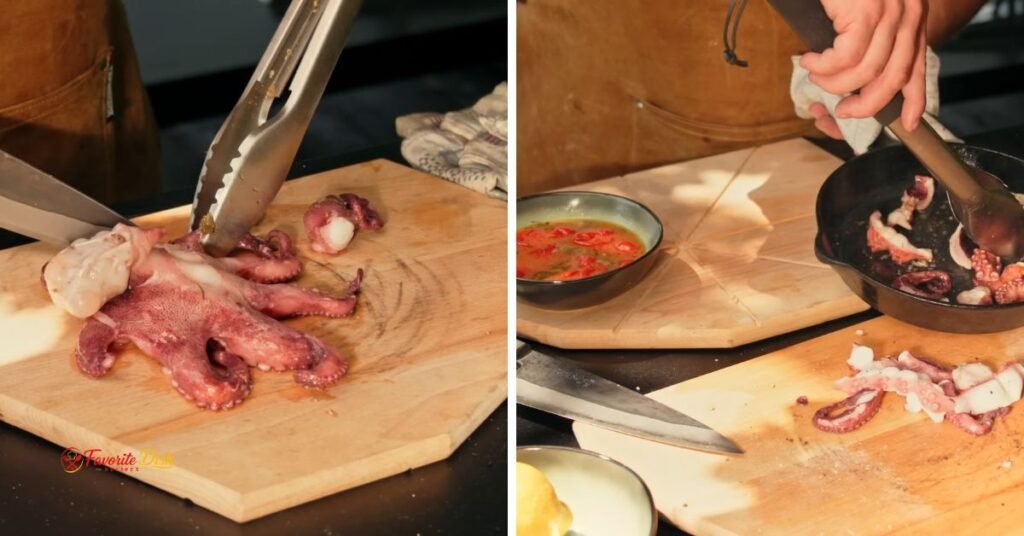
2. Boil Until Tender: Bring a large pot of water to a boil. Add the halved onion, bay leaves, and a pinch of salt. Lower the octopus in and drop to a gentle simmer, not a hard boil, and cook 50 to 65 minutes.
Test with a fork in the thickest part. It should slide in with almost no resistance. I once pulled mine at 25 minutes, sure it was done, and got rubber instead of dinner. More time in the pot fixed it completely.
3. Rest and Cool: Let the octopus sit in the warm cooking water for 10 minutes off the heat. This keeps the outside from drying out while the inside finishes relaxing. Drain well afterward, then pat it dry before cutting.
4. Marinate: Cut the cooled octopus into tentacles and set them in a wide bowl. Pour over the olive oil, lemon juice, garlic, oregano, vinegar, salt, and pepper, then toss well. Chill for at least 30 minutes, up to overnight.
Chilling lets the flavors soak in fully, without cooking the octopus any further.
5. Heat the Grill: Bring your grill to medium-high, close to 450°F, and brush the grates with oil. Wipe them clean first, since leftover residue causes sticking and flare-ups.
A ripping-hot grill matters here, since a cooler surface steams the octopus instead of charring it.
6. Grill the Tentacles: Lay the tentacles directly on the hot grates. Cook 3 to 4 minutes per side, turning once, brushing with a little more oil as they cook.
Look for deep grill marks and slightly crisped, curled edges. That char is where most of the smoky flavor comes from. Keep a spray bottle of water nearby, since occasional flare-ups are normal with all that oil.
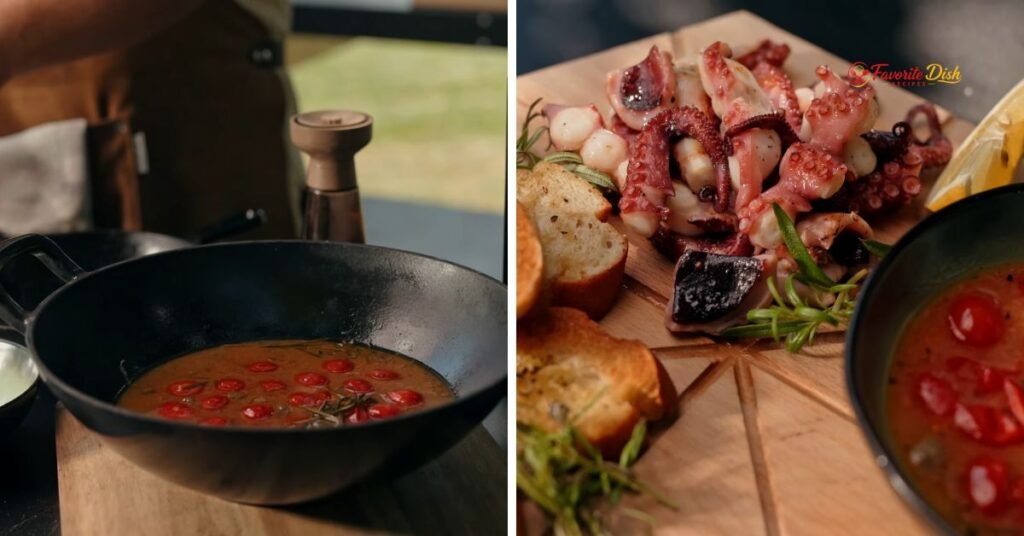
7. Finish and Serve: Move the grilled tentacles to a plate and let them rest two minutes, so the juices settle back in. Drizzle with fresh lemon juice, more olive oil, and chopped parsley. Serve warm, with extra lemon wedges.
Alternative Cooking Methods for Octopus
The grill is the method this recipe leans on, and it gives the best smoky char. Direct, high heat over open flame does something a pan or oven simply can’t copy.
A broiler comes close as a backup. Set an oven rack 6 inches from the heating element, and run the broiler on high. Cook the marinated tentacles 4 to 5 minutes per side, watching closely so they don’t burn.
A cast-iron skillet works well on the stovetop too. Heat it dry over high heat for a full 5 minutes before adding the octopus. Cook 3 to 4 minutes per side, and open a window, since this method smokes more than a grill.
Both alternatives skip the open-flame smoke that defines the original char. For the closest match to a Milos-style plate, the outdoor grill remains the better choice.
Chef’s Tips for Mediterranean Grilled Octopus
Pale, Dull Color After Boiling: This usually means the water never reached a real simmer. Bring it back up before you even think about the grill.
Octopus Sticks to the Grates: Dry it more before marinating, since surface moisture is what causes sticking, not a lack of oil.
Char Won’t Form: Your grill likely isn’t hot enough. Give it a full 10 minutes to preheat before adding the octopus.
Tentacles Curl Unevenly: Score the thickest part with a shallow cut before grilling, so heat reaches the center faster.
Marinade Tastes Flat: Add salt right before grilling, not hours ahead, since early salting pulls out moisture and dulls the flavor.
Texture Turns Mushy Instead of Tender: You likely oversimmered past the hour mark. Pull it the moment a fork slides in easily.
How I Customize This Mediterranean Grilled Octopus
Greek Classic: I add extra dried oregano and a squeeze more lemon right before serving. This version pairs well with a simple Greek salad and warm pita.
Spanish Smoky: A full teaspoon of smoked paprika and an extra splash of apple cider vinegar replace part of the lemon. I serve this alongside patatas bravas for a tapas-style spread.
Spicy Calabrian: A tablespoon of Calabrian chili paste goes straight into the marinade. The heat pairs well with a cold glass of sparkling lemonade on a hot evening.
Feta and Herb: Crumbled feta and fresh mint get scattered over the grilled tentacles just before serving. This one leans sweeter and creamier, closer to a mezze platter.
Party Skewers: I cut the tentacles into smaller pieces and thread them onto skewers before grilling. These disappear fast at a backyard cookout, easier to grab than a full tentacle.
Citrus and Herb: A little orange zest goes into the marinade alongside the lemon, softening the tang with something sweeter. I serve this one at brunch, next to a simple arugula salad.
What to Serve With Grilled Octopus
Warm pita, hummus, and tzatziki round out a full mezze spread around the octopus. A simple salad of cucumber, tomato, and red onion adds a cool, sharp contrast to the smoky char. Grilled flatbread works well too, when pita isn’t handy that day.
For a fuller spread, I’ll open with a light starter like Edamame or a bowl of Crab Dip alongside the pita, then follow with a scoop of Egg Salad as a second cool side next to the char.
On a warm evening last summer, I built a full spread around this exact octopus. It included warm pita, a cucumber salad, roasted potatoes, and a glass of homemade Sprite on the back deck.
That combination turned a Tuesday dinner into something closer to a coastal table, with almost no extra effort. Nobody at the table asked for anything more.
How to Store Mediterranean Grilled Octopus
Leftover octopus keeps well in an airtight container in the fridge for up to 3 days. The flavor actually deepens a bit as it sits in the leftover marinade. It also makes an easy grab-and-go lunch during that window.
Reheat it gently in a skillet over low heat, just until warmed through. A hot pan or a microwave turns the texture rubbery fast, so low and slow works best here. I learned this the hard way with a rubbery microwave batch.
Cold leftovers work well too, straight from the fridge over a green salad. I do this often for a quick lunch, no reheating needed at all. It holds up surprisingly well served cold this way.
For longer storage, freeze cooked octopus in a sealed bag for up to 2 months. Thaw it in the fridge overnight before using it again. Label the bag with the date, since frozen octopus is easy to forget about.
Creative Ways to Use Leftover Octopus
Leftover octopus, still fresh within those first 3 days, works well chopped into a warm pasta dish. Toss it with spaghetti, olive oil, garlic, and a squeeze of lemon, right at the end of cooking. It reheats without losing much texture at all.
It also turns a plain green salad into something closer to a full meal fast. Chop the tentacles small, then scatter them over greens, crumbled feta, and a handful of olives. This version disappears fast at lunch.
Both ideas take less than 10 minutes, since the octopus is already fully cooked. Use it within those first three days for the best texture.
Mediterranean Grilled Octopus FAQs
1. Can I use fresh octopus instead of frozen?
Yes, though fresh octopus often needs more tenderizing work. Freezing naturally breaks down tough muscle fibers. Fresh octopus benefits from a longer simmer, sometimes 15 minutes more than usual.
2. Do I need a meat mallet to tenderize it?
No. A long, slow simmer does the tenderizing here, not physical pounding. Save the mallet for other cuts of meat, since beating raw octopus tends to tear the delicate skin.
3. How spicy can I make this dish?
As spicy as you want. A pinch of red pepper flakes adds mild heat, while a full tablespoon of Calabrian chili paste pushes it further.
4. Can I prep this a day ahead?
Yes, and it often tastes better that way. Boil and marinate the octopus the day before, then grill it fresh right before serving for the best char.
5. What size octopus should I buy?
Look for one between 2 and 3 pounds. Smaller octopus cooks faster and turns tender sooner, while larger ones need closer to an hour and fifteen minutes.
6. Can I skip the grill entirely?
You can serve it straight from the marinade, cold or at room temperature. It won’t have the smoky char, but the flavor from the marinade still comes through clearly. A broiler or hot skillet gets closer to that char without a grill.
7. Does this work with baby octopus?
Yes, and it cooks much faster. Baby octopus usually needs only 20 to 25 minutes at a simmer. Check for tenderness earlier than you would with a larger one.
8. Is this recipe keto or low-carb friendly?
Yes. Octopus itself has no carbohydrates. The marinade relies on olive oil, lemon, and herbs, so this fits comfortably into most low-carb plans. The optional bay leaves and onion add almost nothing to the count either.
9. Why does my octopus taste more like rubber than dinner?
This almost always means it came off the heat too early. Give the simmer more time, closer to an hour, and test again with a fork.
Mediterranean Grilled Octopus Recipe
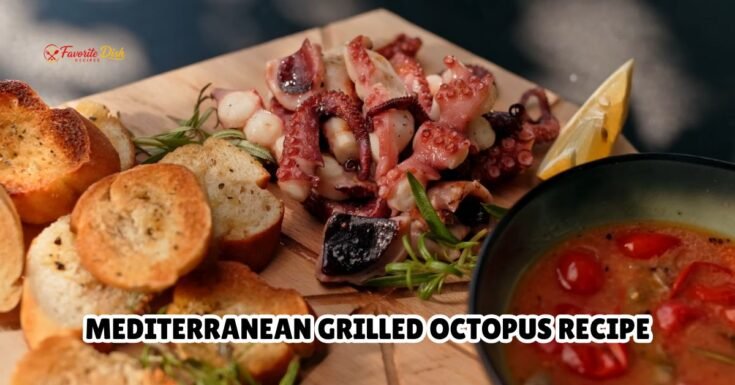
Mediterranean Grilled Octopus Recipe with tender simmered octopus, lemon, garlic, oregano, and smoky grill char for a flavorful seafood dinner.
Ingredients
- 2¼ pounds cleaned octopus
- ⅓ cup extra virgin olive oil, plus more for grilling
- 2 lemons, juiced (about 3 tablespoons)
- 5 cloves garlic, minced
- 1 heaping tablespoon dried oregano
- 2 tablespoons fresh parsley, chopped
- 4 teaspoons apple cider vinegar
- 1 teaspoon kosher salt, plus more to taste
- ½ teaspoon freshly ground black pepper
- ½ teaspoon smoked paprika
- 2 dried bay leaves
- 1 small yellow onion, halved
Instructions
- Rinse the octopus under cold water and pat it fully dry with paper towels. Trim away the beak at the center of the tentacles using a sharp paring knife. Rinse the inside of the head too, clearing out any lingering grit. I do this over my kitchen sink, checking the suction cups for any leftover sand.
- Bring a large pot of water to a boil. Add the halved onion, bay leaves, and a pinch of salt. Lower the octopus in and drop to a gentle simmer, not a hard boil, and cook 50 to 65 minutes. Test with a fork in the thickest part. It should slide in with almost no resistance.
- I once pulled mine at 25 minutes, sure it was done, and got rubber instead of dinner. More time in the pot fixed it completely.
- Let the octopus sit in the warm cooking water for 10 minutes off the heat. This keeps the outside from drying out while the inside finishes relaxing. Drain well afterward, then pat it dry before cutting.
- Cut the cooled octopus into tentacles and set them in a wide bowl. Pour over the olive oil, lemon juice, garlic, oregano, vinegar, salt, and pepper, then toss well. Chill for at least 30 minutes, up to overnight.
- Chilling lets the flavors soak in fully, without cooking the octopus any further.
- Bring your grill to medium-high, close to 450°F, and brush the grates with oil. Wipe them clean first, since leftover residue causes sticking and flare-ups.
- A ripping-hot grill matters here, since a cooler surface steams the octopus instead of charring it.
- Lay the tentacles directly on the hot grates. Cook 3 to 4 minutes per side, turning once, brushing with a little more oil as they cook.
- Look for deep grill marks and slightly crisped, curled edges. That char is where most of the smoky flavor comes from. Keep a spray bottle of water nearby, since occasional flare-ups are normal with all that oil.
- Move the grilled tentacles to a plate and let them rest two minutes, so the juices settle back in. Drizzle with fresh lemon juice, more olive oil, and chopped parsley. Serve warm, with extra lemon wedges.
Nutrition Information:
Yield:
4Serving Size:
1Amount Per Serving: Calories: 175
Mediterranean Grilled Octopus Recipe comes down to two things done well: a slow simmer, then a hot, fast char. Skip either step, and the whole balance falls apart. Get both right, and the tentacles turn tender in the center with crisp, blistered edges.